
Family Doctor vs. Nurse Practitioner: Who Should You See?
When you’re not feeling well or need preventive care, knowing who to see a Family Doctor (MD/DO) or a Nurse Practitioner (NP) can feel confusing. The good news: both are highly trained, qualified, and capable of providing excellent primary care.
At Family Health Practice in Silver Spring, MD, you can feel confident knowing you’re receiving patient-centered care from an experienced Nurse Practitioner committed to your wellness.
This guide breaks down the differences, similarities, and who may be the best fit so you can get the right care at the right time.
What Is a Family Doctor?
Family Doctors are medical doctors (MDs or DOs) who complete:
4 years of medical school
3+ years of residency
Board certification in Family Medicine
They specialize in diagnosing and managing a wide range of health concerns for children and adults.
Family Doctors commonly manage:
Chronic conditions like diabetes or hypertension
Complex diagnostic cases
Specialized medical treatment plans
Full-spectrum family medicine
What Is a Nurse Practitioner (NP)?
Nurse Practitioners are advanced practice registered nurses (APRNs) who complete:
A Bachelor of Science in Nursing (BSN)
A Master’s or Doctorate in Nursing (MSN or DNP)
National board certification
Clinical rotations similar to residency training
In Maryland, Nurse Practitioners have full practice authority, meaning they can:
Diagnose and treat illnesses
Order and interpret labs/imaging
Prescribe medications
Manage chronic conditions
Serve as primary care providers
NPs are known for their patient-centered, whole-person approach, spending more time educating patients and building relationships.
Key Differences (Simple Breakdown)
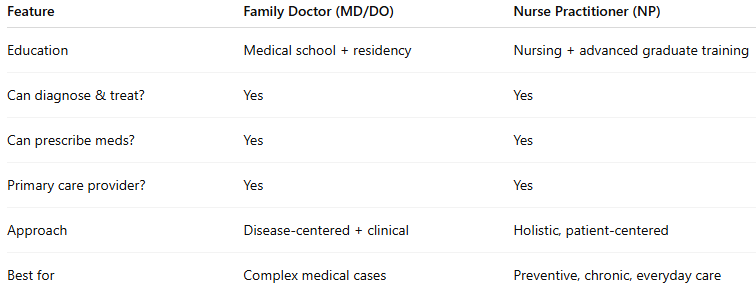
Who Should You See?
Both NPs and Family Doctors are excellent choices — and most patients can receive full primary care from either one.
See a Nurse Practitioner if you want:
Preventive care and wellness support
A provider who explains things clearly
More time during visits
Chronic condition management
Routine care for adults and children
See a Family Doctor if you need:
Complex diagnostic care
Specialized procedures
Very advanced or rare condition management
How NPs Support Families at Every Age
At Family Health Practice, patients rely on NP-led primary care for:
Seasonal allergy care
(related article: https://www.famhealthpractice.com/blog/what-every-parent-should-know-about-seasonal-allergies)Immune and wellness support
(related article: https://www.famhealthpractice.com/blog/-immune-boosting-tips-for-the-whole-family-this-fall)Men's preventive health
(related article: https://www.famhealthpractice.com/blog/mens-health-tips-for-every-age-silver-spring-primary-care)Nutrition & gut health education
(related article: https://www.famhealthpractice.com/blog/gut-health-101-family-health-practice-silver-spring-md)School and pediatric visits
(related articles:
https://www.famhealthpractice.com/blog/back-to-school-physical-family-health-practice-silver-spring-md
https://www.famhealthpractice.com/blog/back-to-school-health-checklist-for-kids-in-silver-spring
https://www.famhealthpractice.com/blog/when-to-keep-your-child-home-from-school-silver-spring-pediatric-care )
Benefits of Seeing a Nurse Practitioner in Primary Care
Shorter wait times
More personalized patient education
Excellent chronic condition management
Emphasis on prevention, not just treatment
A warm, relationship-centered approach
Many families appreciate the extra time and support NPs provide, especially when navigating lifestyle changes, stress, allergies, nutrition, or seasonal care needs.
When You May Need a Referral
Nurse Practitioners manage most conditions in primary care.
However, they may refer you to a specialist for:
Complex endocrine, cardiology, or neurological cases
Advanced imaging follow-up
Specialized procedures
Referrals ensure you get the best-fit care, not because NPs can’t handle your needs but because quality care is collaborative.
The Best Approach: Collaborative Primary Care
At Family Health Practice in Silver Spring, MD, our care model uses a team-based approach. Nurse practitioners often serve as your primary provider to provide high-quality care.
When to Seek Care Immediately
Seek medical attention right away if you experience:
Chest pain
Severe abdominal pain
Sudden shortness of breath
High fever not responding to medication
Loss of consciousness
The Bottom Line
If you’re looking for preventive care, chronic condition support, wellness guidance, or everyday family care, a Nurse Practitioner is an excellent and often preferred choice.
Whether you choose an NP or a Family Doctor, the goal is the same: healthier, happier families.
FAQ Section
Is a Nurse Practitioner as qualified as a Family Doctor for primary care?
Yes. In Maryland, NPs have full authority to diagnose, treat, and prescribe. They are fully qualified to serve as your primary care provider.
Can Nurse Practitioners handle chronic diseases like diabetes or hypertension?
Absolutely. NPs manage chronic conditions with a whole-person approach and detailed education.
Do Nurse Practitioners spend more time with patients?
Research shows NPs often spend more time on patient education, making visits feel more personal and supportive.
When should I see a Family Doctor instead?
Cases needing highly complex or specialized management may require an MD/DO, but most primary care concerns are fully managed by NPs.
